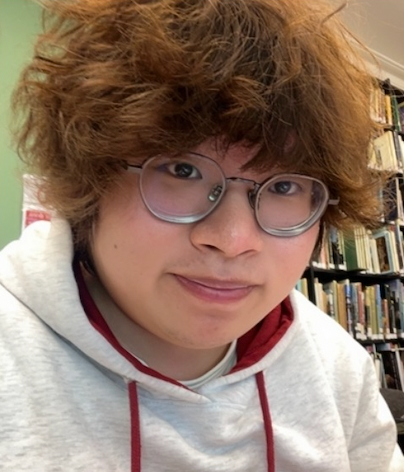
Qing XIAO
PhD Student, Human-Computer Interaction Institute (HCII), School of Computer Science (SCS), Carnegie Mellon University
Contact Me: qingx at andrew dot cmu dot edu
How to pronounce my name: Qīng, pronounced like “Ching” (rhymes with “sing”), Xiāo, pronounced like “Shyao” (rhymes with “meow” but starts with a ‘sh’ sound).
I’m Qing Xiao, a third-year PhD student at the Human-Computer Interaction Institute (HCII) within the School of Computer Science at Carnegie Mellon University, advised by Dr. Hong Shen. Before CMU, I received an MSc in Social Science of the Internet from the Oxford Internet Institute, University of Oxford, and a BA in Communication from the Communication University of China.
My research studies AI as a relational actor. AI now enters the settings where people relate to one another: intimate and private life, the family, the workplace, and public discourse in the wider information environment. In each setting it takes up positions people used to hold for one another, as a friend or partner, a teammate or manager, or a fellow participant in public conversation. I ask two questions:
- How do people’s relationships with AI as a relational actor form and change over time, and how do they reshape the way people live, work, and take part in public life?
- Given that each setting runs on its own norms of care, authority, and accountability, how should AI be designed and governed so that, as a party to these relationships, it serves the people on the other side?
Research Themes
I study three settings where AI increasingly plays relational roles; see the full publication list or Google Scholar.
A growing number of people now form lasting emotional relationships with AI, from dedicated AI companions to general-purpose assistants that were never designed for companionship. These relationships are changing their personal lives. I study how these relationships form, and what happens when an AI’s behavior conflicts with human values. I also ask how society should set boundaries around these human-AI relationships, and how relational AI can be designed and governed for safety and well-being.
Selected papersHide papers3
AI is taking on roles at work that were once held only by people, from teammate to manager. I study how workers adapt as AI enters these roles, and how collaboration, expertise, and authority change when AI becomes part of the team. I also ask what the future of work should look like, including how organizations should restructure work around AI and how workplace AI can be designed and governed to support workers’ agency.
Selected papersHide papers3
Social media is where algorithms, and now AI, became part of most people’s daily lives. I study how people make sense of these computing systems, how they organize to push back, and how power shifts between platforms and the people who depend on them. Recently, I have become especially interested in what happens to public life as AI-generated content and AI agents become ordinary participants on social media, and how platforms should be governed in response.
Selected papersHide papers2
-
🏅 Best Paper Honourable Mention Award at CSCW’26 (Top 3% of submissions)

